
June 2024
Infinite, by Design
In 2023 Ariana Hellebuyck called me about Everand. She was the CMO at Scribd and she'd taken the job partly on a bet that she could ship a new product in six months to compete with Audible. I was on a 9-to-5 break, focused on restoring an Eichler I'd bought during COVID, and wasn't looking for work. I interviewed for it anyway and decided to pause the break.
Scribd had three properties: the legacy Scribd document platform, an audiobook and ebook opportunity that had emerged within it, and SlideShare (a previous acquisition). The bet was to split the audiobook and ebook features into a dedicated product with its own brand, position it directly against Audible, and use that move as the trigger to rebrand everything else: Scribd as a distinct information platform, SlideShare with refreshed positioning, and Scribd Inc. as a parent identity that could hold all of them. Four brand systems in parallel. Everand was the one with the accelerated deadline.
Ariana had engaged with Mother before I started, and they were already working through strategy when I arrived. I picked up agency leadership and the in-house creative work from there. We worked through the summer in tight cycles. The brand we landed was warm, editorial, and built on a searing yellow that became Everand's signature. Everand shipped in September 2023 on time, with the new identity, new product positioning, and marketing infrastructure to sustain it.
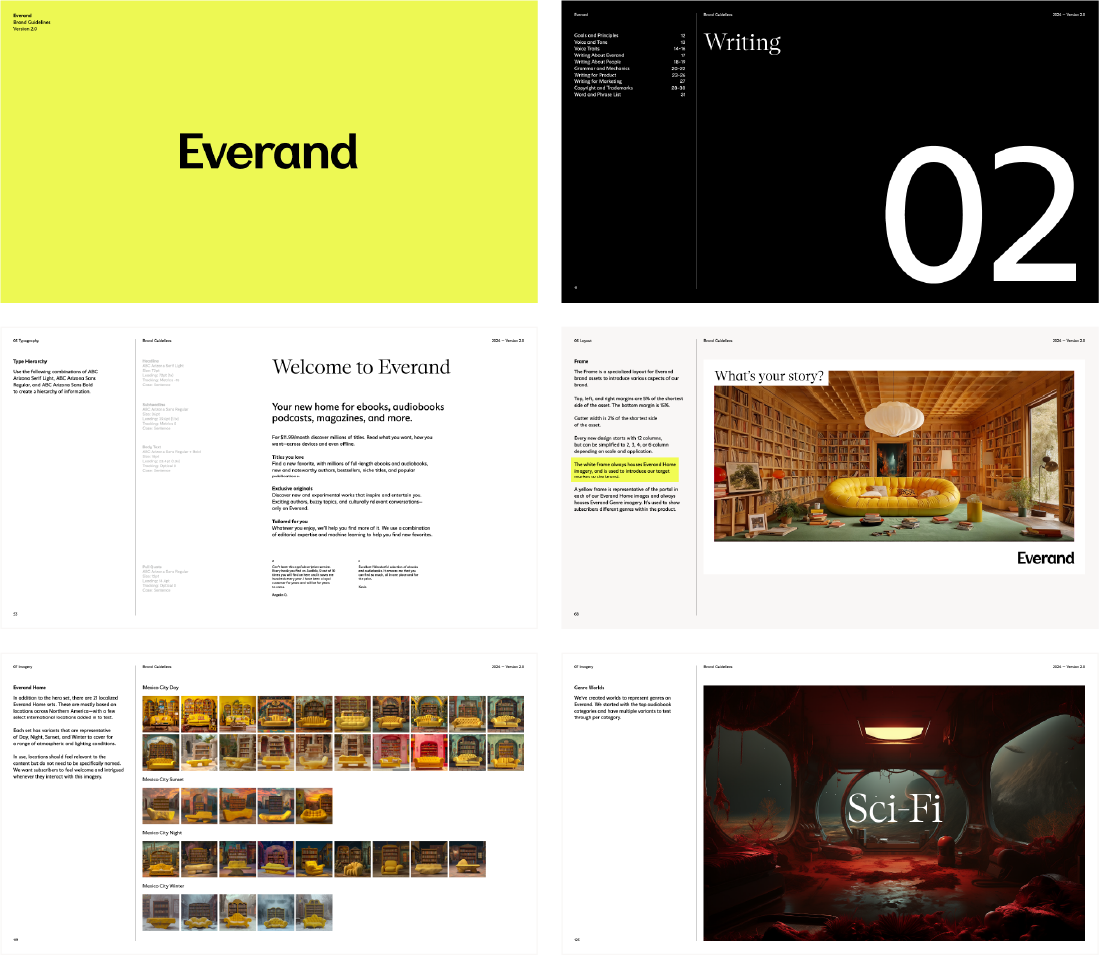
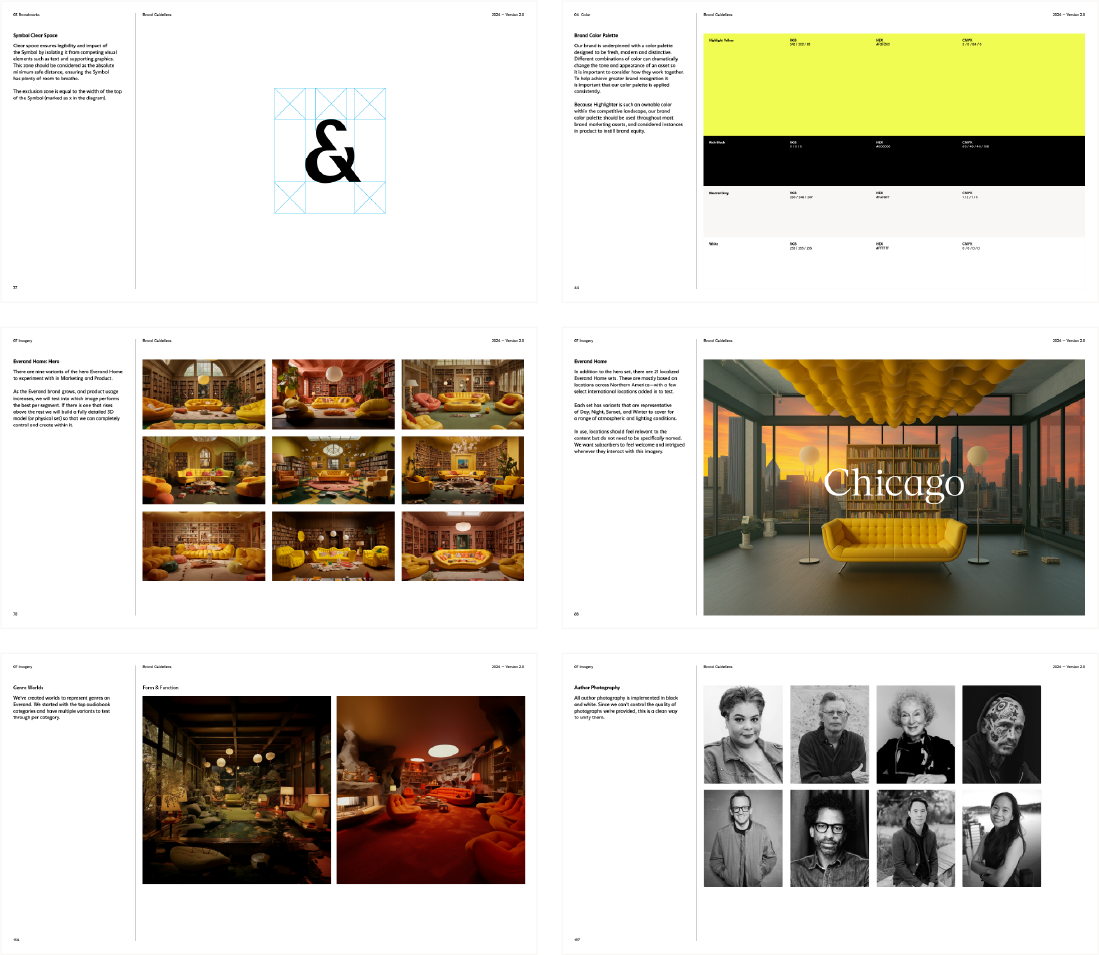
Everand brand guidelines.
By late 2023 Everand was in market and the operational machinery to keep it there was in place. The other three brands were in active development. The problem I needed to address was about scale and adaptation. Everand's catalog covered over 1.5 million titles across 25 primary categories with cover art we didn't control and a user base whose interests cut in every direction. The conventional answer in that situation is a stock-image library that fills boxes when there's no approved asset, but that is objectively lazy and low quality. We could do better.
I had a meeting with Ariana and told her I wanted to make a million pieces of creative for Everand. She looked at me like I was crazy. The number wasn't really the point. The math was 1,000 images x 1,000 pieces of copy: a matrix of exactly 1,000,000 combinations to test in perpetuity, each winning test feeding the next. What I was actually proposing was an infinite system. The number was the hook to get the conversation started.
I brought in Si Parmeggiani as the visual collaborator on the system. Si is a product design leader at Meta with deep agency and tech experience, and a working artist under the alter ego Neptunian Glitter Ball (a generative AI visual universe that had amassed 100,000 followers in its first month). He also happened to live in my neighborhood, which was how I'd come to know his work; we'd been comparing notes on the tools for over a year. Before those conversations I'd known what generative imagery was but had low belief in it for reliable business application.
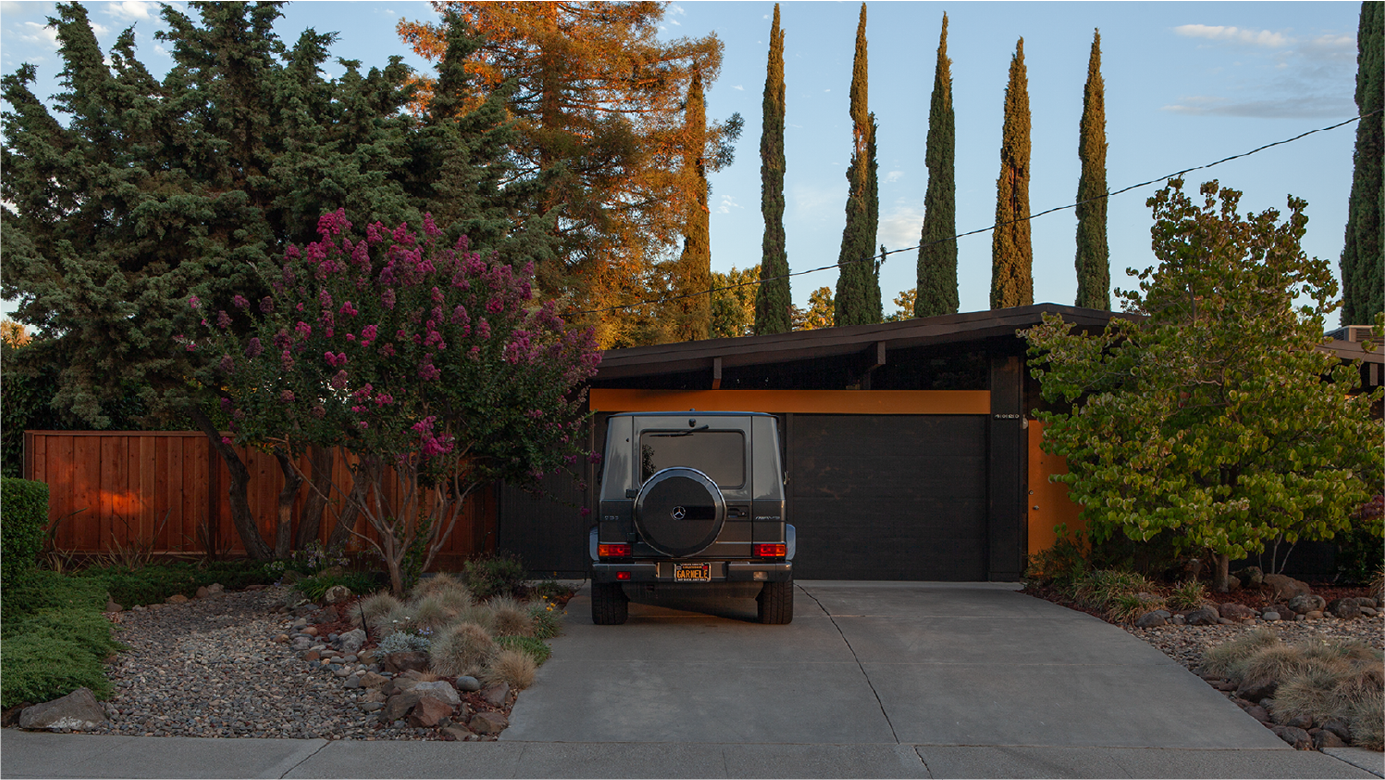
Eichler Homes CC-294, restored.
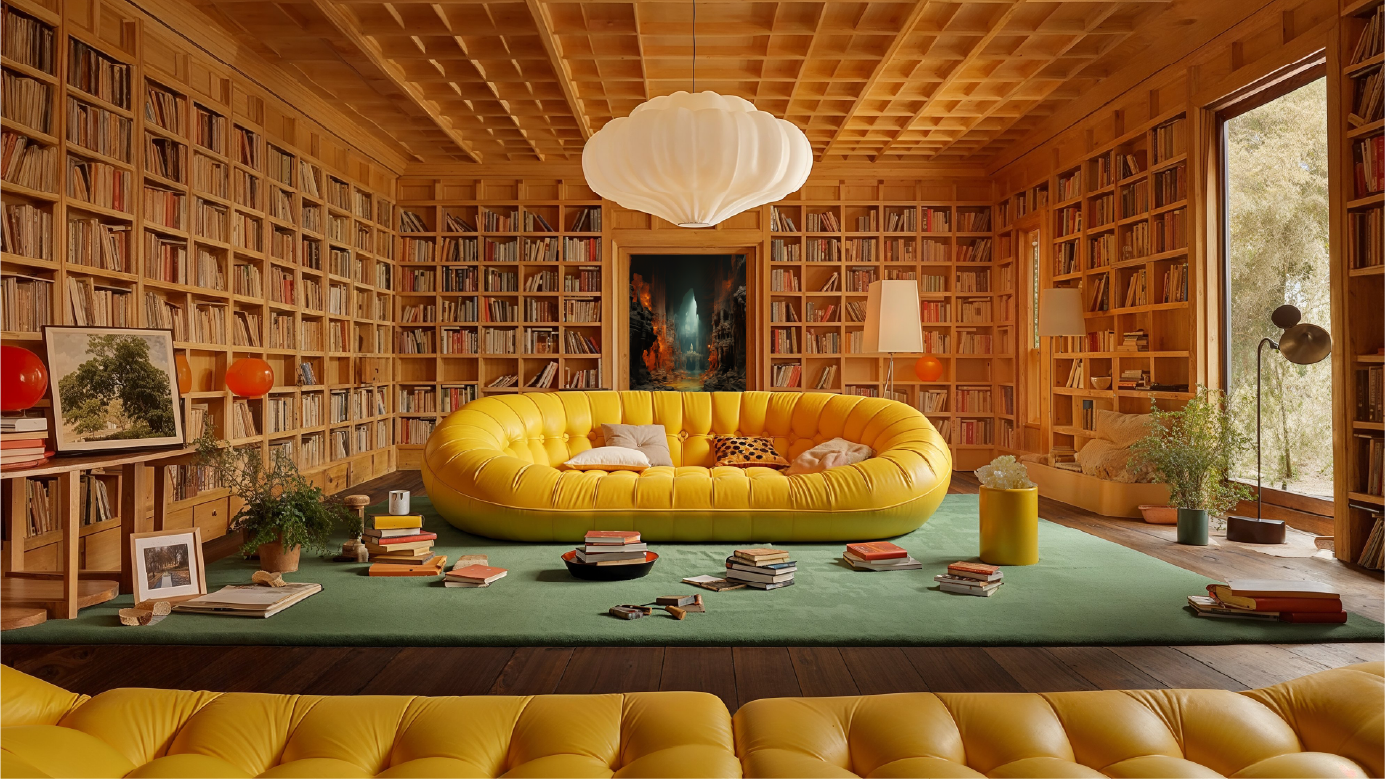
The visual system Si and I built was brand-as-container. The container was a library with a prominent yellow couch, generated as a recurring environment. Behind the couch was a door or a window into another world. Any world the product needed: Mystery, Romance, Sci-Fi, Fantasy, whichever category the system was expressing. The discipline was making the container so recognizable that any combination of contents would read as Everand.
We extended it from there. We made versions of the couch environment localized to Everand's top markets so a user opening the app in their city saw a hero image that registered as place-specific without being literal about it. We built a set of character avatars based on listener and reader behaviors. The Outlaw listened at 2x. Ruth read in multiple time zones. Sugar bailed on books. In addition to the system work, I directed a long-form editorial series with Roxane Gay and four other writers she curated (covers, marketing, and documentary features on each), which is the kind of craft-led narrative work that maps to publishing more than digital product, but was able to sit comfortably within the same brand.
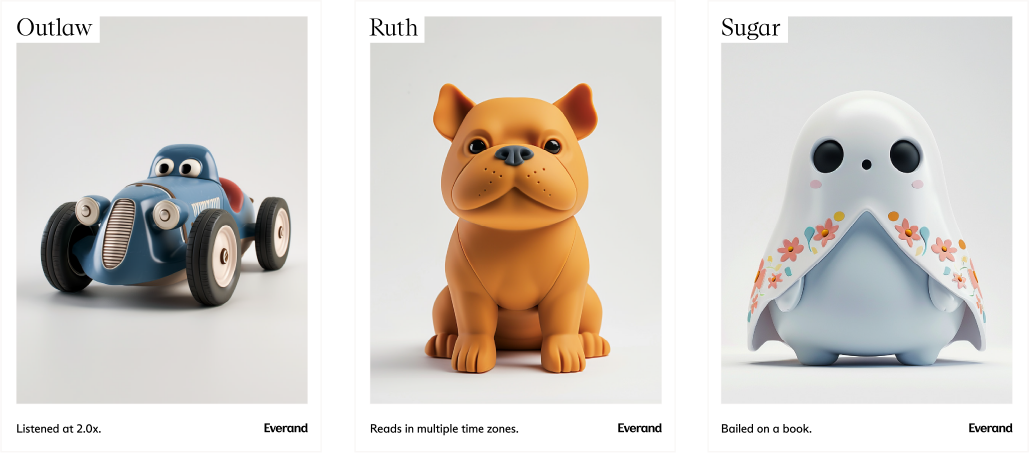
We were among the first creative teams to deploy generative AI brand imagery at this scale, tied directly to business attributes—markets, categories, user behaviors—rather than as one-off campaign experiments. The system was operational, not editorial. It produced creative continuously and fed into marketing and product surfaces. The broader thesis of the Everand work was that a brand system can be designed to multiply rather than standardize. Conventional brand thinking relies on developing rules that constrain output, while the Everand system focused on containers that generate output. The next evolution of this thinking picks up where Everand left off, and will empower brands to autonomously adapt.
Company: Scribd
Role: Executive Creative Director
Years: 2023-2024
Partners: Mother, Si Parmeggiani