
June 2026
Purpose-Built
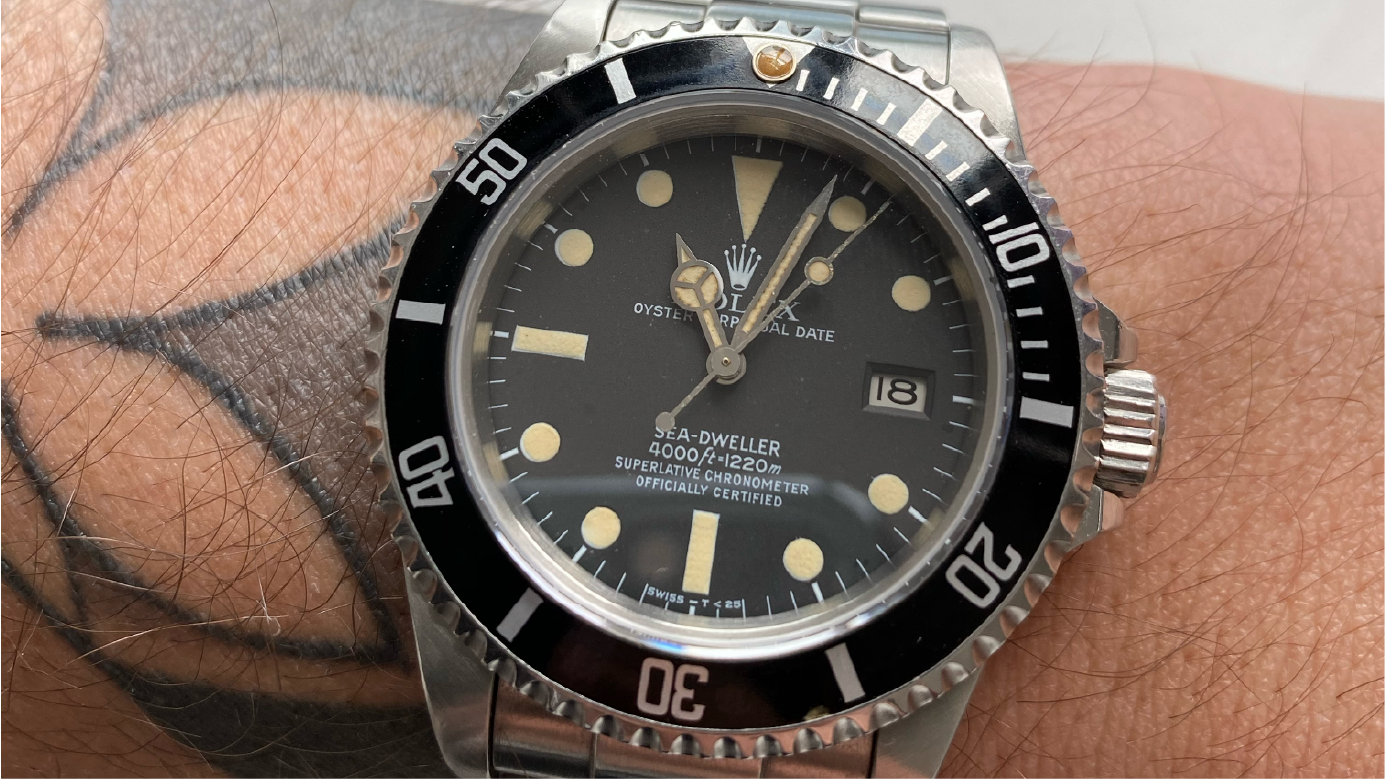
In hindsight, this was a strong first step into vintage. I got lucky.
In the secondary watch market, six-figure transactions happen on a handshake and a prayer. Buyers wire cash to dealers they've never met in person, and wait for FedEx. No other high-value category operates this way. Cars, art, and real estate all have legal, regulatory, and process infrastructure built around them. Watches don't. The market runs on reputation and information asymmetry that increases with experience.
In 2024 I co-founded Collected to build infrastructure for that market. The premise was that the asymmetry isn't a feature of the category; it's a gap in the tooling. Dealers run their businesses out of spreadsheets and WhatsApp threads. The existing marketplaces obscure seller identity, which suits the platforms but works against the dealers who've invested in building their own brands. The infrastructure we're building gives dealers software that respects the businesses they've built, and gives buyers protections commensurate with the price points involved.
We've shipped two versions of the product. The first was a learning exercise: we built features one at a time and discovered, in retrospect, the limits of building without a set component structure. The second was a rebuild on top of an established component library, which let us move faster and reduce the design debt accumulated in V1. This year the case for a V3 was becoming clear, but how to build it was the more interesting problem. The tension wasn't with the market we're serving. The secondary watch market is a late adopter, and we are ahead of it from a product perspective. The tension is about pace and what software itself is becoming. Purpose-built digital product may not be a category much longer.
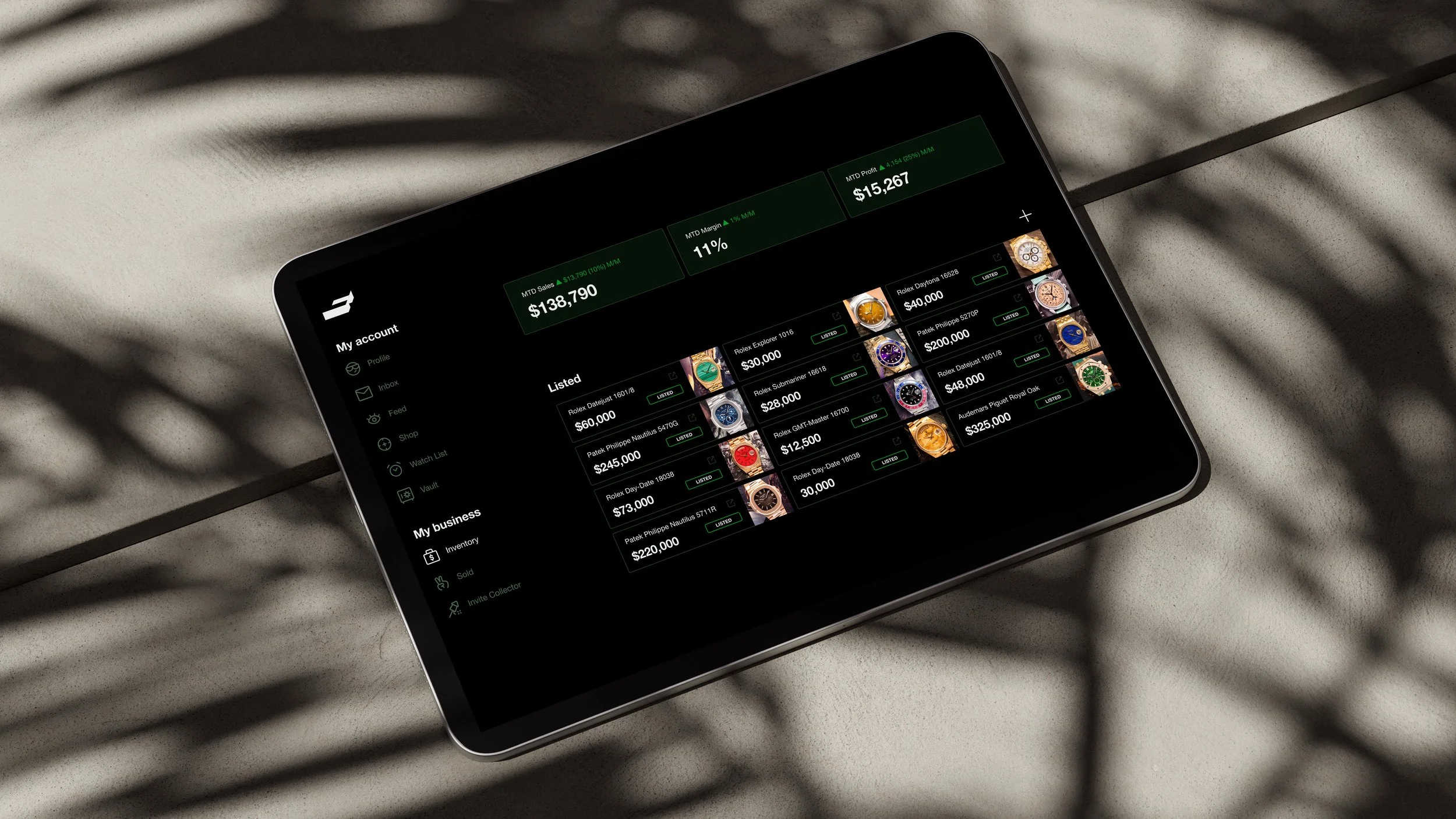
An early iteration of Collected.io
Until early this year, I'd written off consumer LLMs as overhyped. I'd used ChatGPT enough to feel underwhelmed, and what I was seeing produced with AI in writing, design, and image generation looked like AI. My peer group was vehemently landing in the 'human made' counterpoint camp. In February Matt Schumer published an article called “Something Big Is Happening” that articulated the inflection more precisely than anything I'd read to that point. I took his advice literally, and within a month I told myself to kill my prior evaluation and start over.
The work I did from February through April was the operating model. Two decades of working processes—how strategy is articulated and distilled, how briefs are authored, how PRDs and MRDs are structured, how design decisions get documented, how multi-channel requests turn into understandable work orders—encoded as skills, agents, and processes inside Claude, with Linear handling issue tracking, and Figma connected via MCP. Meetings are recorded and summarized into project-level context. Every decision lands as a Linear input. Design moves from PRD to prototype to staging without the manual handoffs that used to consume entire days. Most of what a small team spends its time on is process, and now that process can continue without us.
V3 of the product is being built with this operating model. The design pace is several times what it was. The engineering team is shipping against documentation that was generated as part of the conversation that produced the requirement, rather than after it. This is what made V3 possible to attempt. It's not what's made V3 succeed yet. That part is still in front of us.
What I'm watching now is the gap between what the operating model can produce and what the category can use. We can design and ship faster than the secondary watch market has historically asked any tool to operate. That's not necessarily an advantage in the short term. A product that moves too fast can outrun the trust it's trying to build. The category of company that builds infrastructure for a specific market is increasingly bifurcated: those that sustain themselves on their users, and those whose value to the broader ecosystem is the data their users generate. In the early days of any product, you can't have one without the other.
The larger question is whether software is still purpose-built digital products, or whether what we're building toward is a world where any user spins up only what they need in the moment they need it. Google's announcement last week at I/O that Android users can spin up a working app from a prompt and run it on their phone is the concrete sign of where this is going right now, and we should all be paying close attention.
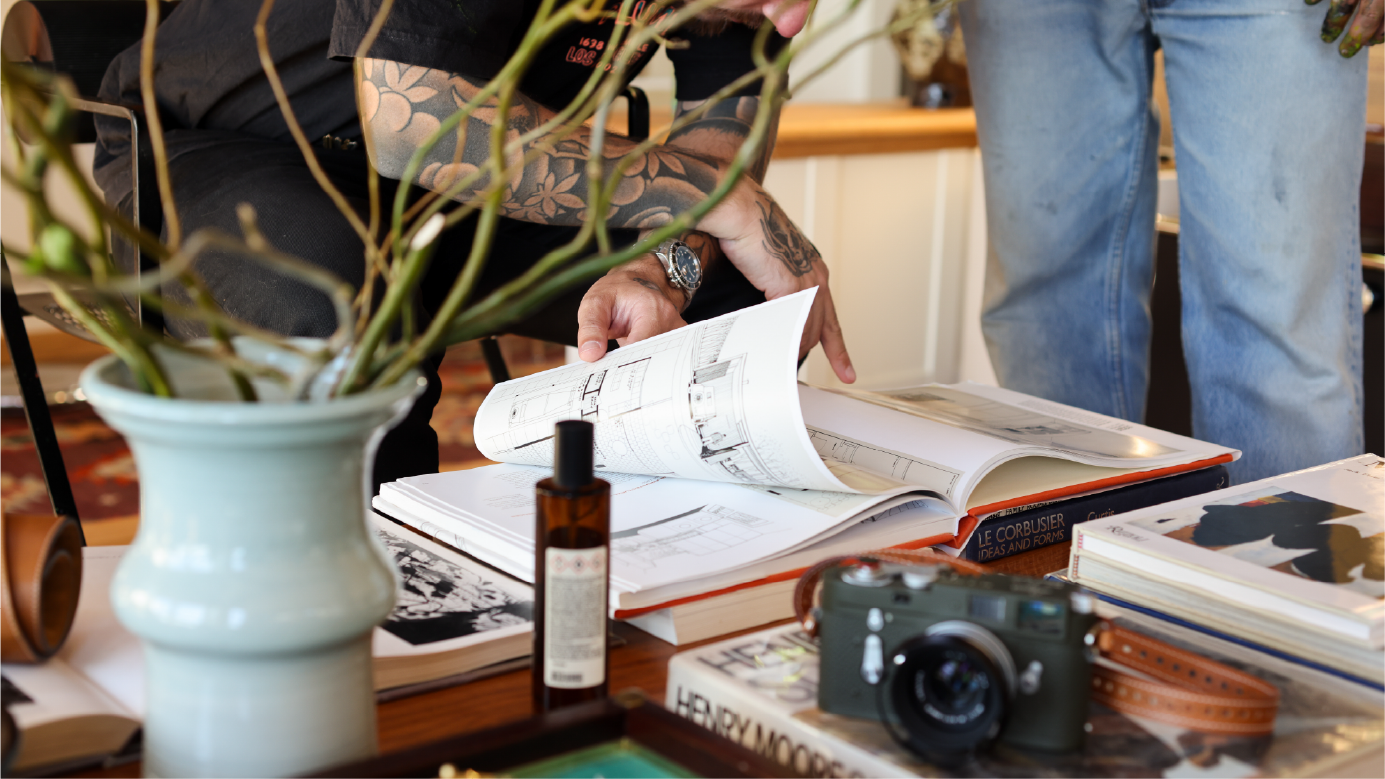
Surrounded by design, but not a screen in sight. This is still ‘work’ right?
Company: Collected
Role: Co-founder & COO
Years: 2024-present